
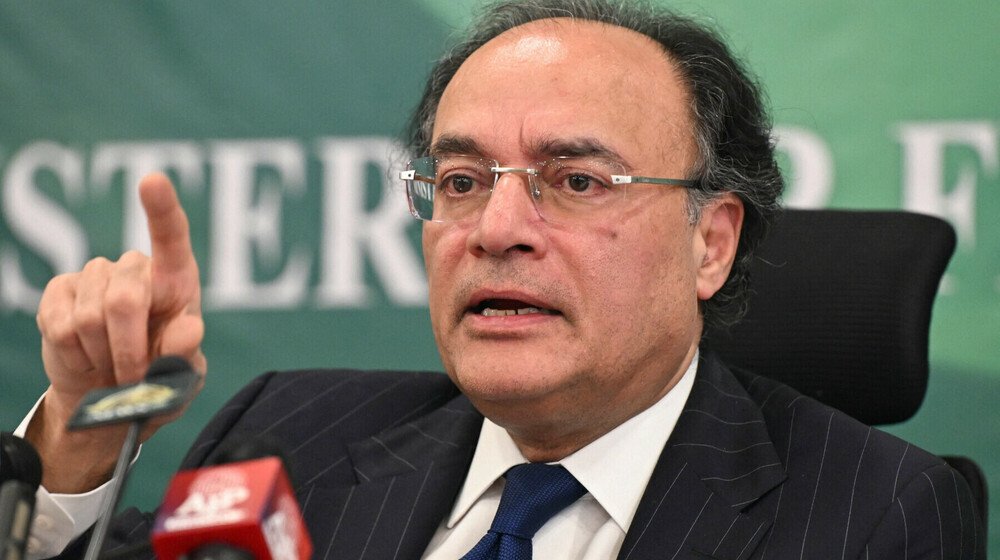
Federal Minister for Finance, Senator Aurangzeb, has said that this week’s 11th NFC Award meeting will be taken forward with a “Pakistan First” approach.
Addressing a press conference in Islamabad, he said working groups will be formed under the TORs, all members will listen to each other, and the dialogue will remain open and constructive.
He added that the 11th NFC Award will be moved forward in the same spirit with which the National Financial Agreement was signed with all provinces, expressing hope that the inaugural session will reflect the same consensus.
The Finance Minister said that after approval from the IMF Board, Pakistan will receive two tranches, one related to climate-resilience commitments from the first review, and the second under the loan programme.
He stated that to stabilize growth, the government is closely monitoring the balance of payments and current account, while monthly reviews of exports, remittances, and imports are underway. He announced that the $3.5 billion financial close of the Reko Diq project has been completed, calling it a “game-changer.”
He said the Export Development Surcharge has been abolished, and its notification will be issued after cabinet approval. The private sector had sought suspension of the surcharge, but the Prime Minister decided to end it completely.
The Finance Minister said that the industry’s concerns regarding high taxes, high energy tariffs, and high interest costs are valid. The policy rate will be lowered gradually. He stressed that the country cannot run on an 8–9% tax-to-GDP ratio; both the federation and provinces must play their part. Work is underway to reduce tariffs in the energy sector and to ease the tax burden on the salaried and formal sectors.
He said foreign companies are investing in Pakistan and overseas investors have also expressed confidence. If local companies begin producing import-substitute goods, it will be revolutionary. Over the past year to 18 months, dozens of foreign companies have invested in Pakistan in sectors including energy and IT, and many more are expected soon.
Regarding debt, he clarified that Pakistan’s debt has not increased, and interest payments have declined, partly due to a reduction in policy rates. The Finance Minister said that the Panda Bond issuance, expected in December, is highly significant. China is a long-term partner, and Pakistan should have entered its market 10 years earlier. Panda Bonds will help reduce borrowing costs.
He said the Tax Policy Office has been established and is now operational; no policy will be made in the FBR. Next year’s budget will be prepared by the Tax Policy Office under the Ministry of Finance. The advisory board, which includes members from the private sector, has already held its first meeting.
Senator Aurangzeb said all Chief Ministers, Finance Ministers, and NFC representatives will be welcomed at this week’s 11th NFC Award meeting. The forum will listen to each other’s viewpoints and form working groups under the TORs, ensuring an open dialogue.
He added that as a nation, “we lack patience” and forget where we stood just two and a half years ago when all sorts of unnecessary items were being imported. He said the government will ensure that Pakistan does not return to a boom-and-bust cycle.
Regarding privatization, he said institutions privatized in the past performed better. In upcoming privatization processes, workers’ dignity will be protected and compensation will be provided. PWD, Utility Stores, and PASSCO have already been closed, and more state-run entities will follow, as the government spends Rs. 1 trillion annually to keep such institutions afloat.
Commenting on the IMF’s Governance and Corruption Report, he said the government facilitated its preparation. It is a technical document that highlights structural weaknesses and covers 30 countries, not just Pakistan. The IMF also recognized the government’s progress, and most recommendations are already being implemented.
Aurangzeb said that in the past five months, the government has issued Rs. 250 billion in tax refunds, and any revenue shortfall will be recovered. He emphasized the need to focus on emerging sectors, including IT, minerals, and pharmaceuticals.
He said the e-Procurement system under PPRA has been implemented, connecting the system with FBR, NADRA, and SECP. More than 9,000 government entities and 41,000 vendors, including 6,000 foreign vendors, are part of the system. On concerns regarding non-public procurement data, he said he would review the matter.
The Finance Minister said that in the first four months of the current fiscal year, the cement sector grew by 16%, fertilizers by 9%, petroleum by 4%, automobiles by 31%, and mobile phones by 26%, while Large-Scale Manufacturing (LSM) expanded by 4.1%, which must be sustained.
About the Author
Written by the expert legal team at Javid Law Associates. Our team specializes in corporate law, tax compliance, and business registration services across Pakistan.
Verified Professional
25+ Years Experience