
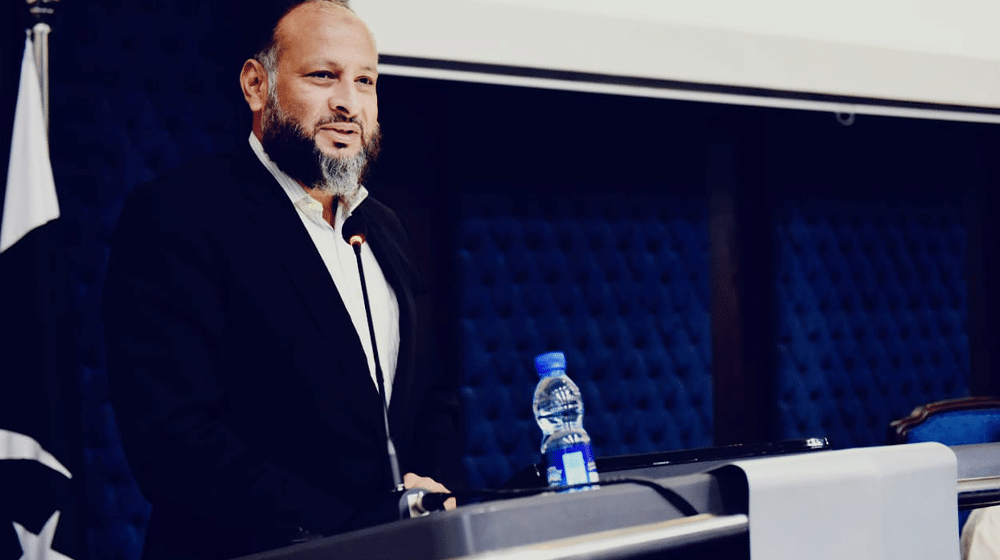
Moonis Alvi, CEO K-Electric, emphasized the importance of continued investment and technological innovation to improve Pakistan’s power sector during his address at the USPCASE-NIPS National Seminar titled “Powering a Sustainable Future: Identifying Problems and Solving Challenges in Electricity Generation, Transmission, and Distribution.”
“Without smart and technological interventions, we cannot make progress in the power sector,” he said while underscoring the need for a forward-looking approach to ensure a reliable and sustainable power supply for the future.
In his remarks, Alvi shared insights on improvements in the power sector, while highlighting KE’s ambitious investment plan of USD 2 billion. This plan focuses on upgrading infrastructure, including power plants, transmission lines, feeders, and transformers. A key component of this transformation is the adoption of the Advanced Distribution Management System (ADMS), which aims to evolve towards self-healing grids for early fault detection and rerouting of power in the future. This technological shift, he said, is expected to significantly reduce downtime and elevate customer experience.
He further added that through ADMS and smart meters, data collected enables predictive maintenance and helps in identifying operational issues before they arise. The company’s goal is to reach a stage where customers don’t even need to register complaints because faults are identified and addressed proactively, he noted.
Alvi also highlighted Pakistan’s advantage in having a diverse energy mix and compared the energy component, which stands at 4 cents, favorably against India’s 5 cents, emphasizing the importance of maintaining a competitive edge through this mix.
The seminar featured a keynote address by Sardar Awais Ahmad Khan Leghari, Federal Minister of Energy, who emphasized the importance of financial modeling for the power sector, considering factors such as economic growth, interest rates, technological advancements, and the impacts of climate change.
The Federal Minister also pointed out the burden of solar net metering on the general consumer base, estimating that net metering costs customers who are directly dependent on the grid Rs. 100 billion annually, benefiting a limited number of affluent households and industries only. He hinted at upcoming upgraded measures to address disparities, stressing the need for a balanced and pragmatic approach to the generation side of the sector.
He noted that the annual losses, amounting to Rs. 600 billion, represent a significant opportunity cost that could have been used to fund research and development in the power sector.
Tauseef H. Farooqi, Former Chairman of the National Electric Power Regulatory Authority (NEPRA), shared insights on the challenges and future of electricity generation in the 21st century. He stressed that Pakistan’s prosperity is closely tied to the success of its power sector. He highlighted the initiatives that he introduced, which helped drive the sector forward while harmonizing it through the introduction of reforms.
Syed Akhtar Ali, Former Member Energy, Planning Commission, highlighted the issue of an energy surplus in Pakistan, where capacity is high, but demand lags behind. Ali further stressed the need for indigenization in the energy sector, emphasizing that without a focus on local fuel solutions and a forward-thinking approach, sustainable progress will remain out of reach.
The seminar provided a platform for in-depth discussions on the future of Pakistan’s power sector, focusing on both the need for investment and innovation, as well as structural reforms required for sustainable growth.
About the Author
Written by the expert legal team at Javid Law Associates. Our team specializes in corporate law, tax compliance, and business registration services across Pakistan.
Verified Professional
25+ Years Experience