
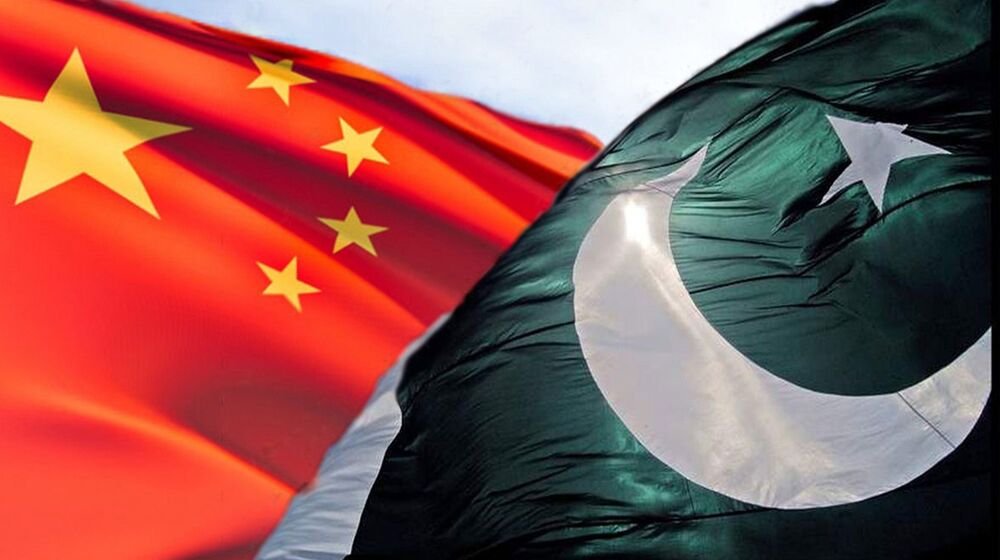
Pakistan and China have agreed to expand cooperation under the China-Pakistan Economic Corridor (CPEC) by setting up advanced digital infrastructure, including data centers, nationwide fiber optic networks, and joint artificial intelligence and quantum laboratories.
The commitments were made during the 14th Joint Cooperation Committee (JCC) meeting held in Beijing, co-chaired by the planning ministers of both countries. Officials, experts, and representatives from the relevant ministries of both nations participated in the session.
Federal Minister for Planning Ahsan Iqbal highlighted that CPEC’s second phase would focus on youth, innovation, and people-driven development. He described Pakistan and China as “iron brothers” bound by mutual trust and a shared destiny. He proposed establishing 10,000 PhD scholarships, innovation centers, and internship programs with Chinese institutions to provide Pakistani youth with global exposure and skills. He stressed that the partnership would uplift marginalized districts by replicating China’s poverty alleviation model.
The minister noted that CPEC Phase One had already delivered 8,000 megawatts of electricity, 888 kilometers of highways, and transformed Gwadar from a fishing town into Pakistan’s maritime gateway.
He said the modernization of the ML-1 railway would rejuvenate Pakistan’s transport sector. Additionally, projects for agricultural reforms, electric vehicles, and green energy were proposed for inclusion in the second phase, with a target for Pakistan to achieve 60 percent clean energy by 2030.
Emphasizing economic growth, Iqbal suggested linking every CPEC corridor with export targets and proposed establishing export-oriented Special Economic Zones (SEZs) in Karachi and Islamabad. He called for greater access to Chinese markets for Pakistani exports, comparable to ASEAN countries. He also mentioned that border markets in Khunjerab, Torkham, and Gwadar would enhance regional trade, while a mining corridor from Chagai to Gwadar would open new avenues of development.
CPEC’s five corridors, Growth, Innovation, Green, Livelihood, and Regional Connectivity, are envisioned to redefine Pakistan’s development model. Under the Digital Silk Road, projects such as advanced data centers, fiber optic connectivity, and joint AI laboratories will be implemented.
The minister reaffirmed Pakistan’s commitment to ensuring the safety and security of all CPEC projects and Chinese personnel, while also highlighting that Phase Two would focus on business-to-business partnerships rather than solely government-to-government cooperation.
About the Author
Written by the expert legal team at Javid Law Associates. Our team specializes in corporate law, tax compliance, and business registration services across Pakistan.
Verified Professional
25+ Years Experience